What Should You Look for in a Period Underwear Manufacturer?
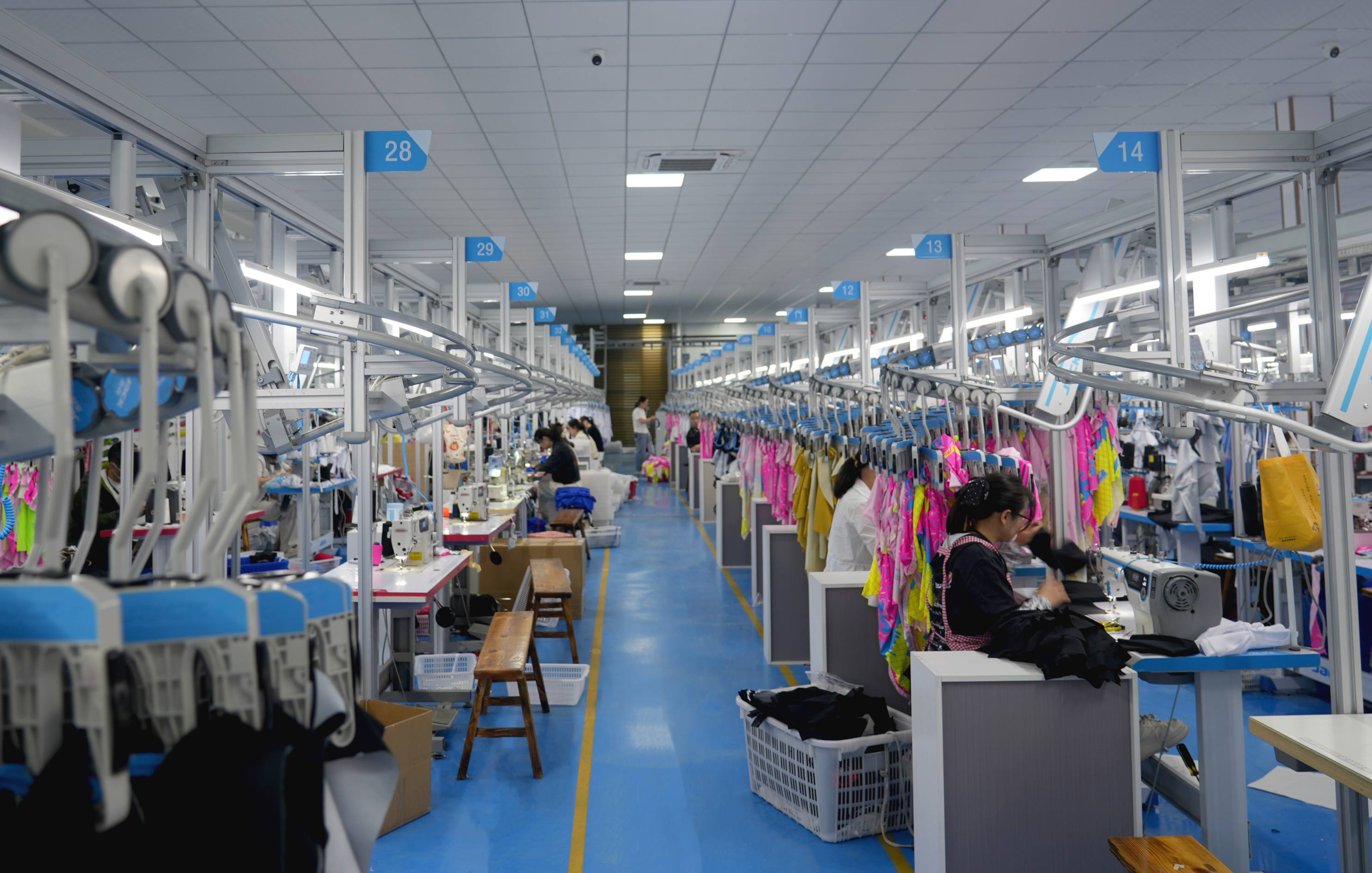
A period underwear manufacturer should be assessed on measurable product performance, material safety, wash durability, factory controls, and commercial capacity rather than unit price alone. A useful review covers absorbency in milliliters, leak resistance, fabric weight, shrinkage, colorfastness, seam strength, chemical testing, and production consistency. In 2024–2026 sourcing programs, brands also need current PFAS documentation because restrictions have expanded across several U.S. states and European markets. Ask for reports tied to the actual fabric or finished garment, not a generic certificate. For production, compare MOQ by color and style, defect limits, sample-to-bulk tolerances, lead time, and monthly capacity. A supplier should be able to turn every important product claim into a specification, test report, or production record.
Period underwear is harder to manufacture than ordinary briefs because one garment can combine 3–5 functional layers in the gusset. A common structure includes a skin-contact layer, an absorbent layer, a leak-resistant membrane, and an outer fabric, while some designs add another distribution or absorbent layer. Each material stretches, shrinks, absorbs moisture, and reacts to heat differently. If the body fabric shrinks 4% while the gusset construction shrinks 1%, repeated washing can change fit and create puckering around seams. Start supplier screening with the construction itself, because manufacturing experience becomes much easier to judge once every layer has a defined job.
Ask the factory to provide the fiber composition, GSM, supplier, finish, stretch, and expected shrinkage for every major fabric. “Cotton,” “bamboo,” or “waterproof fabric” is not a technical specification.
Material records should go beyond a percentage printed on a care label. A body fabric described as 95% cotton and 5% elastane can behave differently at 160 GSM and 220 GSM, while two polyester leak-resistant fabrics can differ in membrane thickness, breathability, stretch, and wash stability. Request specifications for body fabric, lining, absorbent material, membrane, elastic, thread, labels, and finishes. For orders produced in 2026, batch identification is also useful: a supplier should be able to connect a finished production lot with its fabric and dye lots when a later complaint involves color, shrinkage, odor, or delamination.
Once materials are documented, absorbency needs the same level of measurement. A supplier advertising “heavy flow” without a test method gives a buyer little information, because total saturation capacity is different from practical capacity during wear. Ask whether a claimed 20 ml, 30 ml, or 40 ml capacity represents the complete amount retained under laboratory conditions, a defined test procedure, or an internal estimate. Testing several samples rather than one garment matters because layer weight, stitching, and material placement vary during production; a test set of 5–10 pieces provides more information about consistency than a single passing sample.
| Performance item | What to request | Example acceptance format |
|---|---|---|
| Absorbency | Test method + sample count | ≥30 ml across tested samples |
| Shrinkage | Length and width after washing | ≤5% |
| Colorfastness | Test standard and grade | Reported test grade |
| Leakage | Defined liquid volume and procedure | No leakage at agreed volume |
| Fit | Finished measurement chart | Within agreed tolerance |
| Wash durability | Repeated wash protocol | 20, 30 or 50 cycles |
| Defects | Inspection standard | Agreed AQL before shipment |
Absorbency data should then be checked against leakage performance. A garment might technically retain 30 ml when fully saturated but leak earlier around the sides if the absorbent panel is too narrow or positioned poorly. Overnight products need particular attention to front and rear gusset coverage, while everyday styles may prioritize a thinner construction. Ask for gusset length and width in centimeters and place them in the tech pack. If a size M sample has a 7 cm absorbent width but bulk units vary by 1 cm, the functional coverage can change noticeably even when the outside measurements pass inspection.
Performance testing should cover the finished garment, not only a loose piece of absorbent fabric. Seams, membrane punctures, panel placement, elastic tension, and garment shape can affect leakage.
Wash durability follows naturally because period underwear is sold as a reusable product. Testing a new garment only once says little about how it performs after months of use. A practical development program can compare measurements and functional performance before washing and after 10, 20, 30, or 50 controlled wash cycles. Record shrinkage, elastic recovery, delamination, seam condition, absorbency, leakage, and appearance. A 3% dimensional change may be manageable within the intended fit, whereas a 7–8% change can materially alter sizing. Care instructions should match the materials and testing conditions instead of being added to the label after production.
Chemical management needs equal attention because the garment remains in prolonged skin contact. PFAS has received substantial regulatory attention in recent years, including U.S. state restrictions affecting textile and apparel categories from 2025 onward. Buyers should ask whether fluorinated treatments are intentionally used, which restricted-substance list the factory follows, what test method its laboratory uses, and whether the report covers the finished garment or individual components. A report from 2022 for a different fabric is weak support for a 2026 production lot made with another membrane, dye, or finish.
Documentation should also match the company making the claim. OEKO-TEX, GOTS, GRS, ISO-related systems, and social-audit programs cover different subjects and scopes; one certificate cannot substitute for another. Check the legal entity, facility address, certificate scope, issuing body, and validity date. If a supplier says its fabric is certified, establish whether the certification applies to the fabric mill, the garment factory, or the finished product. Buyers comparing suppliers such as Ljvogues should apply the same document checks to every candidate rather than treating website claims as production approval.
After compliance records are reviewed, sample development shows how well a factory handles technical instructions. Give every candidate the same tech pack, including composition, GSM, construction drawings, measurement points, tolerances, gusset dimensions, absorbency target, stitching, elastic width, labels, colors, and packaging. If three factories receive different instructions, their prices and samples cannot be compared fairly. A useful development sequence may require 2–4 sample rounds: an initial prototype, revised fit sample, performance-confirmation sample, and pre-production sample. Record every approved change so that the final sample becomes a manufacturing reference rather than an informal visual guide.
Bulk consistency is the next test because a technician can make 3 excellent samples without proving that a production line can repeat them across 5,000 units. Request an approved pre-production sample and a signed specification sheet before cutting begins. Measurement tolerances can vary by location: a waistband might allow ±1 cm while a smaller gusset dimension may require tighter control. Material substitutions should require buyer approval. A change from a 180 GSM fabric to 165 GSM is an 8.3% reduction in fabric weight and may alter opacity, hand feel, stretch, and durability even when the fiber percentages remain identical.
Quality control should therefore begin before finished goods inspection. Incoming fabric can be checked for shade, width, weight, defects, and specification; cutting can be checked for size accuracy and layer orientation; sewing inspections can cover stitches, gusset alignment, elastic tension, and membrane damage. Finished units then need measurement, workmanship, labeling, and packaging checks. Many apparel buyers use AQL-based sampling under ISO 2859-1 or related inspection practices rather than opening every carton. The selected AQL levels and definitions of critical, major, and minor defects should be agreed before production, not negotiated after defects appear.
-
Define whether leakage, holes, contamination, or an incorrect size label counts as a major or critical defect.
-
Set measurement tolerances in the tech pack rather than accepting “industry standard.”
-
Ask for in-line inspection records when an order reaches roughly 20–50% completion.
-
Require a final inspection before shipment for larger orders.
-
Keep approved samples and test reports for repeat orders produced in 2026 and later.
Inspection procedures lead directly to capacity planning because rushed production can affect consistency. Ask for the factory's monthly capacity for period underwear specifically, not its total underwear output. A facility producing 500,000 basic briefs per month may have only a few lines experienced with multi-layer gussets. Separate material lead time from sewing time: 25 days for production is not genuinely a 25-day order cycle if custom fabric requires another 30 days. For a launch date, calculate fabric booking, lab dips, sampling, bulk production, inspection, packing, freight, customs clearance, and a reasonable buffer.
MOQ should be examined with the same precision. A quotation showing 1,000 pieces may refer to one style, while a 500-piece MOQ may apply separately to each color. Four colors at 500 units create a 2,000-piece commitment before size allocation is considered. Custom-dyed fabrics can have mill minimums above the garment factory's sewing MOQ, and printed packaging may introduce another quantity requirement. If one factory charges $6.80 at 1,000 units and another charges $6.20 at 5,000 units, the $0.60 saving is only $3,000 across 5,000 pieces; excess unsold inventory can easily outweigh it.
Pricing comparisons also need identical Incoterms and specifications. EXW, FOB, CIF, and DDP quotations cover different portions of the supply chain, so a $5.50 EXW garment cannot be compared directly with a $6.10 FOB garment. Ask whether the quotation includes labels, individual bags, cartons, testing, sample charges, custom elastic, printing, and inspection. A 10% lower garment price can disappear after separate packaging, inland transport, testing, and handling charges are added. Compare estimated landed cost per sellable unit, including an allowance for defects, rather than factory price alone.
Commercial terms become more informative when communication is tested during sampling. Send technical questions that require numbers: What is the membrane composition? What is the body fabric GSM tolerance? How many wash cycles were used? How many specimens were tested? What percentage shrinkage was recorded? A supplier that answers with measurements and documents is easier to audit than one repeatedly using terms such as “high quality” or “very absorbent.” In a 2026 supply relationship involving several production runs, written change control also matters because staff, mills, dye lots, and material availability can change between orders.
Factory structure deserves a final operational check. Ask which processes occur at the stated facility and which are outsourced: knitting, dyeing, lamination, cutting, sewing, printing, inspection, and packing may happen at different sites. Outsourcing itself is common in apparel, but buyers need to know who controls each stage. Visit the facility when order size justifies it, or arrange an independent audit. For a first order of 10,000 pieces, spending a small percentage of the purchase value on factory verification, testing, and pre-shipment inspection can provide information that product photos, quotations, and sales presentations cannot provide.
A manufacturer comparison can then be scored with evidence rather than impressions. One practical allocation is 20% for technical capability, 15% for materials and performance, 15% for quality control, 15% for compliance documentation, 10% for price and MOQ, 10% for capacity and lead time, 5% for communication, 5% for supply-chain transparency, and 5% for development flexibility. Require a document, test result, approved sample, factory record, or written specification behind high scores. A supplier scoring 82/100 with repeatable testing and stable bulk production can be commercially safer than one scoring 65/100 while offering a noticeably lower opening price.